StudentAid BC Update: A new Student Information Management System (SIMS) will be launched by StudentAid BC on June 23, 2026. Summary of transition timeline of application could be found Financial Aid
New Attendance System in Place. Effective August 4, students need to rename themselves on Zoom as: Name (Student ID - Class ID).
Short Term Training

Civil Infrastructure Design Technology Certificate

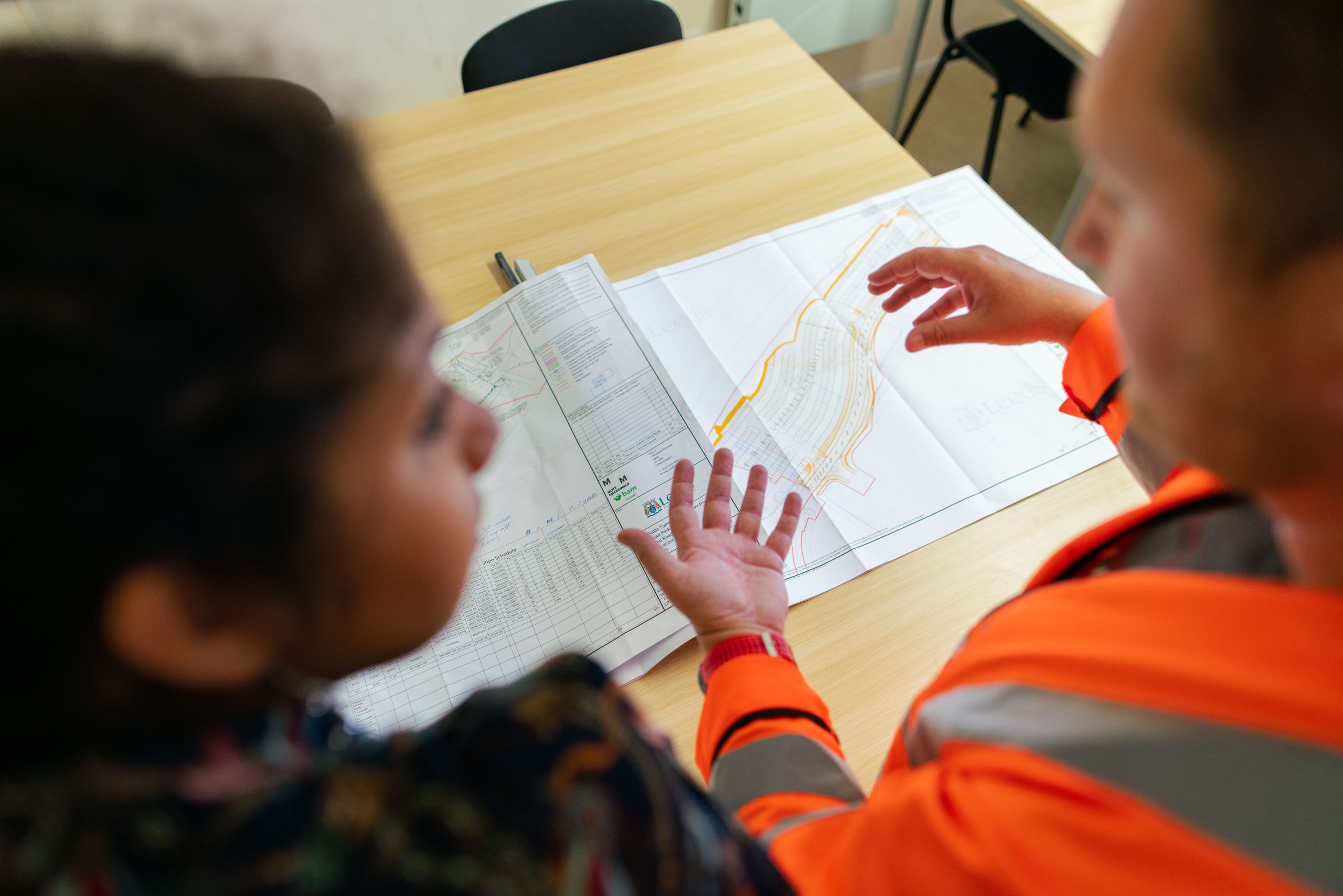
Train for a rewarding career in civil infrastructure design — one of the most essential and consistently growing areas of the engineering sector. This program provides comprehensive training in civil design, site planning, transportation infrastructure, utilities, and the specialized software tools used by engineering firms, municipalities, and infrastructure developers across BC. With a practicum placement included, you’ll graduate with real-world experience and the skills to make an immediate contribution.

Next Start Date: September 7th, 2026
Request Program Information

Program Snapshot

CredentialCertificate

Duration35 Weeks with Practicum

Practicum4-Week Practicum (150 hours)

Schedule20 hours/week, Monday – Friday, daytime and evening classes

DeliveryIn-Class, Online (Synchronous)*, or Combined

Employment Opportunities

Civil CAD Drafter
Civil Engineering Technician / Technologist
Infrastructure Design Technician
Civil Estimator
Civil Inspector
Municipal Engineering Technician
View more below →

Why Brighton?

Practicum Placement Included
Accredited by TAC (Technology Accreditation Canada)
Pathway to Certified Technician (CTech) Recognition
AutoCAD Civil 3D & Civil Design Software Training
Infrastructure, Transportation & Site Design Skills
Strong Career Demand in BC’s Infrastructure Sector

Skills You’ll Gain

AutoCAD Civil 3DCivil Infrastructure Drawing & Design StandardsRoad Design SkillsMunicipal Piping Design SkillsCivil Inspection

Before attending Brighton, I had a master’s degree in Civil Engineering from Ukraine, with project management and planning experience. I decided to come to Brighton College to get the missing knowledge I need in the Canadian market.

– Alex Rozdobidle, Structural and Building Technology
Program Video

Watch the Program Video

Learn how this TAC-accredited program develops practical skills in civil infrastructure design, road systems, municipal piping, surveying, Civil 3D, and inspection.

Civil Infrastructure Design Technology Certificate program preview

Program Description

The Civil Infrastructure Design Technology Certificate provides specialized training in civil engineering design and infrastructure technology, preparing graduates for technical roles in engineering firms, municipal governments, and infrastructure development organizations. The program addresses key areas of civil design including site planning, road and transportation infrastructure, drainage and stormwater management, utility design, earthworks, and civil construction documentation.

Students develop hands-on proficiency in industry-standard civil design software, including AutoCAD Civil 3D, while building a strong foundation in engineering drawing principles, surveying concepts, geomatics, and infrastructure systems. The curriculum is aligned with BC’s engineering and infrastructure industry standards, developing the technical competencies employers look for in civil design technicians.

The included practicum provides students with direct experience in a professional civil engineering or design environment, bridging classroom learning with real-world practice. Graduates pursue careers as civil engineering technicians, infrastructure design technicians, and municipal engineering support professionals with engineering consultancies, government agencies, and infrastructure firms.

Learning Objectives

Upon completion, successful students will have reliably demonstrated the ability to:

  • Use AutoCAD effectively to create working drawings.
  • Use AutoCAD for architectural and structural drawings.
  • Apply local building-code standards to architectural drawings.
  • Lay out buildings in civil land-development subdivision plans.
  • Perform geometric design for roadway systems.
  • Apply Transportation Association of Canada design standards to road infrastructure design.
  • Understand road-pavement design and construction standards.
  • Understand civil-roadworks inspection techniques.
  • Apply hydraulic principles and engineering formulas to municipal sewer and water-piping design.
  • Use Civil 3D for land-development, subdivision, and infrastructure drawings.
  • Use Civil 3D to create plan, profile, and cross-section drawings.
  • Use conventional surveying equipment to perform surveying tasks.
  • Create a professional drawing portfolio.
  • Apply acquired knowledge and skills during the practicum placement.

Courses

AUT010 | Computer and Mathematic Fundamentals

Computer operation, file management, Microsoft Word, Excel, algebra, trigonometry, and geometry.

Duration: 20 hours, 1 week.
Prerequisite: none.

AUT100 | AutoCAD Fundamentals

Fundamental 2D drafting and basic 3D modelling with AutoCAD.

Duration: 60 hours, 3 weeks.
Prerequisite: none.

AUT140 | Technical Communications

Technical writing, verbal communication, reports, and project presentations.

Duration: 20 hours, 1 week.
Prerequisite: none.

AUT150 | AutoCAD Advanced

Advanced AutoCAD commands, drawing management, layouts, surface models, and solid models.

Duration: 60 hours, 3 weeks.
Prerequisite: AUT100.

CCT100 | Building Code

BC Building Code, zoning bylaws, construction standards, specifications, and related drawings.

Duration: 40 hours, 2 weeks.
Prerequisite: AUT100.

AUT810 | Civil 3D

Civil 3D plans, profiles, cross-sections, corridors, surfaces, parcels, alignments, piping, earthworks, and quantities.

Duration: 80 hours, 4 weeks.
Prerequisite: AUT100, AUT150, CCT100.

AUT410 | Building Piping Services

Water, storm, and sanitary piping components, sizing, hydraulic loads, drawings, and BC Plumbing Code.

Duration: 40 hours, 2 weeks.
Prerequisite: AUT100, AUT150, CCT100.

CCT140 | Construction Estimating 1

Construction quantity takeoffs and cost estimating for buildings and civil infrastructure.

Duration: 60 hours, 3 weeks.
Prerequisite: AUT100, CCT100.

CCT110 | Health and Safety in Construction

Occupational health and safety, workers’ compensation, accident prevention, public protection, hazards, and WHMIS.

Duration: 20 hours, 1 week.
Prerequisite: none.

CCT130 | Surveying

Surveying theory and hands-on use of modern equipment for construction and engineering projects. Onsite fieldwork in Burnaby is required.

Duration: 60 hours, 3 weeks.
Prerequisite: AUT100.

CCT150 | Civil Construction Inspection and Management

Civil inspection, pavement structures, Gantt charts, CPM, scheduling, contracts, bonding, and tendering.

Duration: 20 hours, 1 week.
Prerequisite: AUT100, CCT100.

CIV200 | Structural Design & Analysis

Structural analysis, shear force, bending moments, stress, deflection, beams, columns, footings, floors, and bracing.

Duration: 20 hours, 1 week.
Prerequisite: AUT100, AUT150, CCT100.

CIV250 | Road Design

Urban and rural roadway design, geometry, traffic, drainage, pavement structures, and earthwork quantities.

Duration: 75 hours, 3 weeks.
Prerequisite: AUT100, AUT150, CCT100.

CIV300 | Urban Municipal Service Design

Storm and sanitary sewer systems, water distribution, hydraulics, flow calculations, and servicing plans.

Duration: 40 hours, 2 weeks.
Prerequisite: AUT100, AUT150, CCT100.

AUT650 | Portfolio Development

Professional engineering and architectural drawing portfolio, interviews, résumés, and cover letters.

Duration: 20 hours, 1 week.
Prerequisite: AUT100, AUT150, CCT100.

WEP150 | Practicum

Students integrate program theory and skills in a professional workplace.

Duration: 150 hours, 4 weeks.

Admission Requirements

  • High school diploma or mature student status*
  • Legal eligibility to study in Canada
  • Pass College's mathematic entrance examination
  • English proficiency requirement from one of following options:
    1. Completion of 3 years of full-time secondary education (Grades 8-12), or 2 years of if Grade are 10, 11, or 12, have been successfully completed in the program’s language of instruction in a country where the language of instruction is one of the principal languages, or
    2. Completion of 2 years of full-time post-secondary education in the program’s language of instruction in a country where the language of instruction is one of the principal languages (includes international education credentials recognized through WES, ICES, and IQAS), or
    3. Evidence of achievement in a recognized standardized language assessment at an overall level equivalent to IELTS 5.5 (academic) or higher: IELTS academic 5.5; TOEFL IBT 46; CAEL 40; CELPIP (Listening 6, Speaking 6, Reading 5, Writing 5); DET 95, PTE 43; FCE 160 or “C”; Cambridge Linguaskill B2; LANGUAGECERT Academic B2; MET B2; iTEP Academic 3.5; EIKEN Grade Pre-1. Test results must be dated no more than two years before the start date of the program, or
    4. Evidence of graduation from language program with a minimum grade/level from a Languages Canada accredited institution with an established pathway/articulation agreement allowing direct entry (no further testing required) to a diploma or degree program at a public institution in Canada. The pathway/articulation agreement must be current at the date of enrolment, or
    5. Accuplacer - This option may only apply when:
      • English is the program’s language of instruction, and
      • the applicant is a mature domestic student facing barriers, and
      • the applicant cannot access their educational records or cannot provide sufficient evidence of secondary or post-secondary education as outlined in this policy
      • Applicant is 19 years or older at the start of the program and is a Canadian citizen or permanent resident, and
      • Applicant provides attestation that they have completed at least three years of full-time instruction in English* in a country where the English is one of the principal languages, and
      • Applicant completes an Accuplacer English Assessment (Next Generation: Reading, Writing and WritePlacer) and achieves the following minimum scores:
        • Reading: 230, and Writing: 230, and WritePlacer: 4

Refer to Language Proficiency Policy for details.

*Mature Student is defined as an individual who is 19 years of age or older at the start of the program.

*Under no circumstances can these Admission Requirements be waived.

Employment Opportunities

Start Your Career As

  • Civil Engineering Technician
  • Municipal Engineering Assistant
  • Construction Technician
  • Civil Drafting Technician
  • Surveyor Assistant

Grow Your Career Into

  • Civil Project Manager
  • Civil Project Estimator
  • Structural Building Designer
  • Civil Engineering Inspector
  • Building Inspector

Labour Market Snapshot

  • NOC: 22300
  • Annual Earnings *Average: $75,858
  • Job Openings (2025–2035): 1,030
  • Wages (BC): High $50.00/hr
    Median $38.00/hr
    Low $23.00/hr

Data sourced from WorkBC. Occupation information aligned with the National Occupational Classification (NOC).

Career-path occupations generally require additional industry experience, employer training, certification, professional registration or further education. Completion of this program does not by itself confer a professional licence or protected occupational designation.