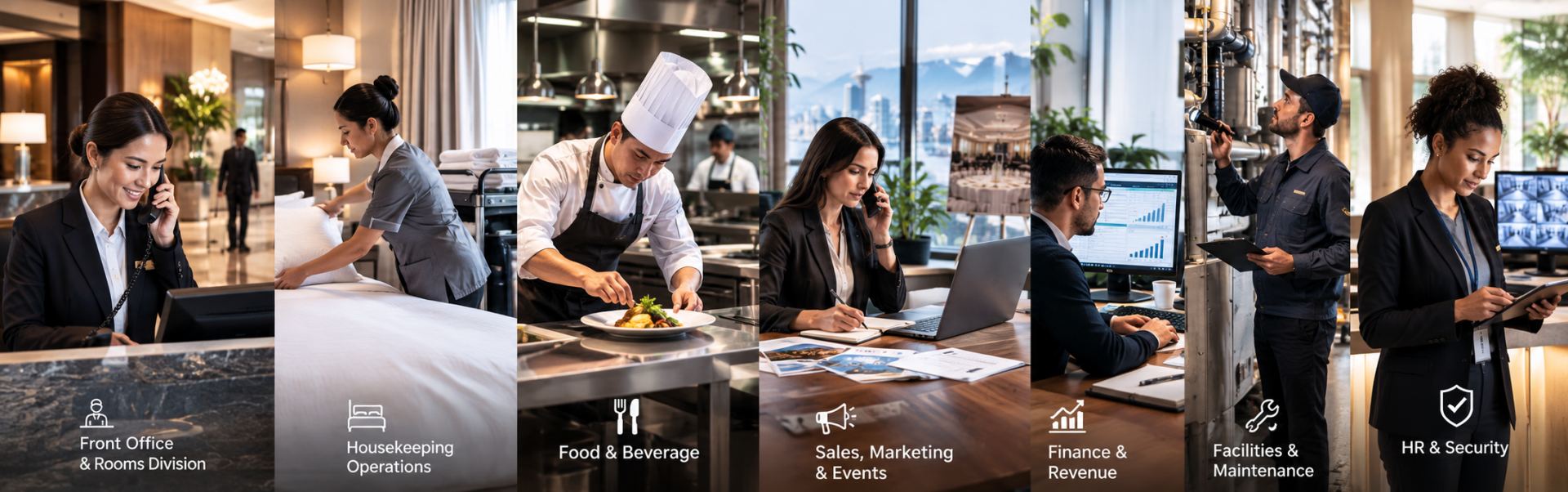
At six in the morning a hotel is already busy, and almost none of that activity is happening at the front desk. The kitchen is receiving deliveries. A housekeeping supervisor is printing room assignments. An engineer is checking why a boiler alarmed overnight. In the back office, someone is looking at last night’s occupancy and deciding what tonight’s rooms should cost.
Most people picture two jobs when they hear hospitality: standing behind a desk, or carrying plates. Those jobs are real, and plenty of good careers start in them. But a hotel is a collection of quite different businesses stacked into one building, and the work in each one feels nothing like the work next door. Knowing which department suits your temperament matters more than most people realise.
Rooms Division and Front Office
This is the department most visible to guests: reception, reservations, concierge, night audit. The rhythm is interruption driven. You are handling arrivals, departures, room moves, complaints and phone calls, often at the same time, and you are the person who has to decide quickly whether to comp something, move someone or escalate.
People who enjoy front office tend to like being on stage a little. They recover quickly from a difficult guest, they remember faces, and they would rather have a busy shift than a quiet one. If you dislike being interrupted mid task, this is not your department.
Housekeeping Operations
Housekeeping is the largest team in most hotels and the one that runs most on systems. Every day the department has to clean a variable number of rooms to a fixed standard with a fixed number of staff, in an order that gets checkout rooms ready before the first arrivals. It is logistics, quality control and people management.
The people who thrive here are organised, calm and good at fair scheduling. They notice detail without being precious about it, and many move into rooms division management later.
Food and Beverage
Food and beverage covers restaurants, bars, room service, banquets and catering. The pace is fast, physical and intensely social, and the day has clear peaks. A banquet team lives by the event order. A restaurant team lives by the reservation book. When it is busy, everyone is moving, and when the rush ends, there is real satisfaction in having got through it well.
This suits people who like working shoulder to shoulder with a team and who prefer a shift with a clear beginning and end. It is less appealing if you want predictable hours or quiet concentration.
Sales, Marketing and Events
This department sells the hotel: corporate accounts, group bookings, conferences, weddings, partnerships with tour operators. Much of it is relationship work carried out over weeks or months, punctuated by the intense delivery period around an actual event.
It appeals to people who are persuasive, comfortable following up without being pushy, and happy to be measured against targets. It also rewards writing clearly, since a lot of the work is proposals, contracts and event orders that other departments have to execute exactly.
Finance and Revenue
Behind the scenes sit accounting, accounts receivable, purchasing and revenue management. Hotel accounting has its own rhythm of night audit, daily revenue reports and month end. Revenue management is the discipline of setting rates and controlling availability so the hotel sells the right room to the right guest at the right price.
If you like patterns, spreadsheets and being right rather than being liked, this is a strong fit. It is also one of the quieter departments, which some people find a relief after years on the floor.
The Departments People Forget
Facilities and maintenance keeps the physical building working: mechanical systems, preventive maintenance schedules, energy use, capital projects. The work is a mix of planned tasks and urgent fixes, and it suits practical problem solvers who like understanding how a building actually functions.
Human resources in a hotel is unusually hands on because turnover is a constant reality and teams are large, multilingual and shift based. Recruiting, onboarding, scheduling policy, training and conflict resolution all live here. Security and loss prevention is about guest and staff safety, incident response, access control and protecting the property. Both suit people who are steady under pressure and comfortable documenting things properly.
Trying More Than One Before You Commit
You do not have to guess. Brighton College’s Hospitality Operations Certificate runs 25 weeks at 20 hours per week and includes a 4 week practicum of 100 hours, with day and evening classes available. Its electives map directly onto the departments described above: Front Office Operations, Housekeeping Operations, Food and Beverage Operations, Hospitality Sales and Marketing, Security and Loss Prevention, Facilities Management and Design, Human Resources Management, Basic Hotel and Restaurant Accounting, Managing Technology in Hospitality, and Leadership and Management. Choosing electives is a low cost way to test what interests you.
If you want longer exposure, the Hospitality Management Diploma runs 48 weeks and includes a 12 week co-op, and the Hospitality Management with Co-op Diploma runs 72 weeks with a 32 week co-op. A longer placement often means seeing more than one department, which is exactly what helps you choose. Placement is not guaranteed, and students are expected to help find placements with support from Career Services.
Choosing Where to Look First
Pick the department whose daily rhythm you would still enjoy on a bad day, not the one with the nicest job title. Hotels promote internally more than most industries, and lateral moves between departments are normal, so a starting point is not a life sentence.
Mention the department that stood out when you get in touch below. Someone can tell you which electives cover it and where the work experience component sits in each program.